
How to Make Sheep Milk Clabber: Your Homemade Cheesemaking Culture
Learn how to make your own cheesemaking culture at home using nothing but sheep milk!
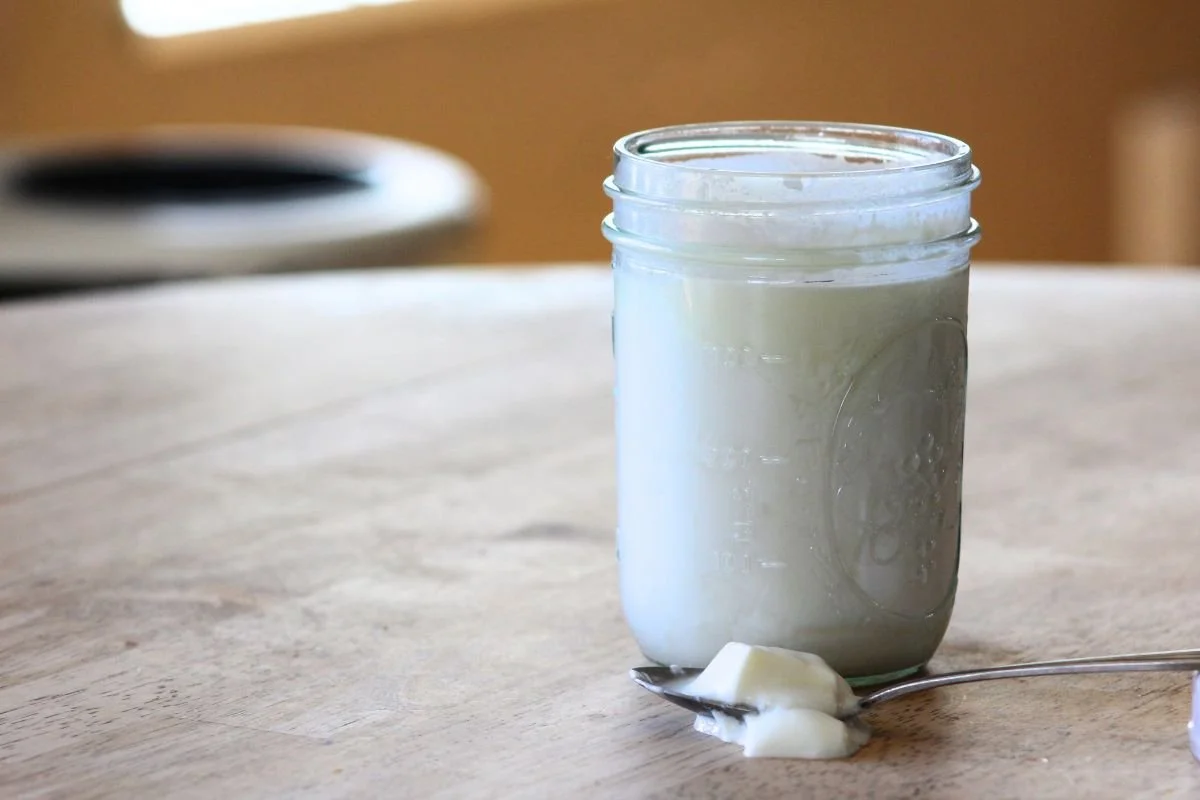
Sheep milk clabber is simply fermented milk — and once you understand how to make it, you'll never need to buy freeze-dried cultures again. Whether you're making sour cream, cultured buttermilk, or any cheese your heart desires, clabber is the one culture that does it all.
Everything You Need to Know About Starting a Sheep Milk Clabber Culture
When I discovered I could culture my cheeses with clabber instead of purchasing expensive freeze-dried cultures, I started a jar on my counter and never looked back. I began with raw cow's milk — fairly simple and straightforward — but after my ewes lambed and I tried to transition to sheep milk, I ran into trouble.
As it turns out, sheep milk can be a little trickier to clabber than cow's milk. So what is a dairy shepherdess to do? I got to experimenting, and I'm here to share everything I learned.
Why Sheep Milk Clabber Can Be Tricky (And How to Get It Started)
There are a few reliable ways to get your sheep milk clabber going, especially if you're starting from scratch:
Option 1: Start with cow's milk. Begin your clabber with raw cow's milk first, then gradually transition to sheep milk. The cow's milk clabbers more easily and gives the culture a strong start.
Option 2: Use a starter culture. Adding a small amount of cultured buttermilk or an existing starter culture to your fresh sheep milk gives it a significant head start.
Option 3: Start from scratch. No starter? No cow's milk? No problem — you can absolutely begin with sheep milk alone. It just takes a little more time and patience. I'll walk you through the full process below.
My Clabber Experiment: What I Tested and What I Learned
I recently ran a hands-on experiment with three jars to test the different starting methods:
Jar #1: Fresh, warm, raw sheep milk + cultured buttermilk from the freezer
Jar #2: Fresh, warm, raw sheep milk — nothing added
Jar #3: Fresh, warm, raw sheep milk — left completely alone, never refreshed
Each morning after milking, I took a spoonful from Jars #1 and #2, added it to a fresh jar, and topped it off with warm raw milk straight from the udder. Jar #3 I left entirely undisturbed.
The results were exactly what you'd expect: Jar #1 (with starter culture) clabbered first. Jar #2 followed a day or two later. Jar #3? Still sitting on top of my fridge — liquid.
The key takeaway: feed your clabber fresh, warm milk every single day. This one habit makes all the difference. A daily feeding dramatically speeds up the process compared to simply leaving the milk to sit.
How to Know When Your Clabber Is Ready to Use
Getting your first clabber set is exciting, but it isn't quite ready to use as a starter culture just yet. You want a culture that's strong and reliable — one that consistently thickens within 12–24 hours.
Here's what to look for: true clabber isn't just cream thickening on top. It's set all the way down to the bottom of the jar. Sheep milk won't set up quite as thickly as cow's milk, but it will still be firm. You should be able to scrape aside a bit of the cream and take a clean scoop of the set clabber underneath.
Once you have that first solid set, feed your clabber again. If it's set again the next morning, you're good to go — your culture is ready.
For best results, always use the freshest clabber possible as your starter. I typically make a fresh jar the day before I plan to make cheese so it's at peak activity.
When clabber goes bad: Clabber should not have bubbles. If it has bubbles, or it separates into curds and whey, you have let it go too long and have over fermented it. Bubbles are caused by yeast. When you are trying to start a clabber culture, do not panic about bubbles. You may get a few in it and that’s ok, just take a scoop, and add fresh milk. Continue this cycle until you have clabber that sets up in 12-24 hours, smells pleasantly tangy, and has no bubbles before using as a starter culture.
How to Maintain Your Clabber Culture
Keeping a clabber culture is very much like maintaining a sourdough starter. It requires daily feeding and daily discard when kept at room temperature.
Once your culture is strong and established, you can move it to the refrigerator where it will keep for at least a week. That said, use it within a day when you're planning to make cheese — fresher is always better.
What to Do With Clabber Discard
Daily discard adds up fast, but don't throw it away! Here are some of my favorite ways to use it:
Smoothies: Add a spoonful of sugar or jam, give it a good shake, and drink it for breakfast. It's tangy and delicious.
Frozen clabber: My family's absolute favorite — check out the full post here.
In place of yogurt: Swap it one-for-one in any recipe calling for yogurt.
Bread and pancakes: Thin it by shaking, then substitute for water or buttermilk in your favorite recipes.
Cultured butter: Culture your cream with clabber before churning. The result is a thick, tangy cultured buttermilk — far better than the thin brown liquid you get from sweet cream butter.
Cheesemaking: Use clabber in any cheese recipe that calls for mesophilic or thermophilic cultures. Clabber is primarily mesophilic but contains thermophilic strains as well. Add 1/4 cup per gallon of milk (or 10ml per liter).
Yogurt: You can even use it to make yogurt through adaptive fermentation.
Clabber should have a pleasantly tangy smell, very much like sour cream. If it smells off or unpleasant, trust your nose and start fresh.
More posts you might enjoy:

Sheep Milk Clabber
Clabber is simply fermented milk - but the uses are endless. I love to use mine to culture my homemade cheese and eat the discard for gut healthy goodness!
Ingredients
- Sheep milk
Instructions
- Add 1 cup of fresh from the udder sheep milk to a jar
- Cover with a paper towel or cloth, then set someplace warm to ferment. (I usually set mine on top of the fridge)
- If you are milking twice a day go ahead and feed your clabber twice a day, if not, go ahead and feed your clabber in 24 hours.
- Remove one spoonful of milk from your jar, add to a clean jar. Top with 1 cup of fresh from the udder warm milk.
- Repeat this until it clabbers, it takes mine about four days to clabber.
Frequently Asked Questions About Sheep Milk Clabber
Can I use pasteurized sheep milk to make clabber? Clabber relies on the naturally occurring beneficial bacteria present in raw milk. Pasteurized milk has had those bacteria killed off, which makes it very difficult — if not impossible — to clabber on its own. Raw milk is strongly recommended for this process.
How do I know if my clabber has gone bad? Healthy clabber smells pleasantly tangy, similar to sour cream or yogurt. If it smells putrid, overly sour, or off in any way, discard it and start fresh. Visual mold (anything other than the natural cream layer) is also a sign to start over.
How much clabber do I use when making cheese? Use 1/4 cup of clabber per gallon of milk, or about 10ml per liter. Always use the freshest clabber you have for best results — ideally made the day before.
Pin for later
