Pre & Post Sheep Milking Routine
Let’s talk about what you need to do (or not) before and after you milk your ewes. Don't let fear of doing it wrong stop you from milking sheep, making cheese, and gaining experience.
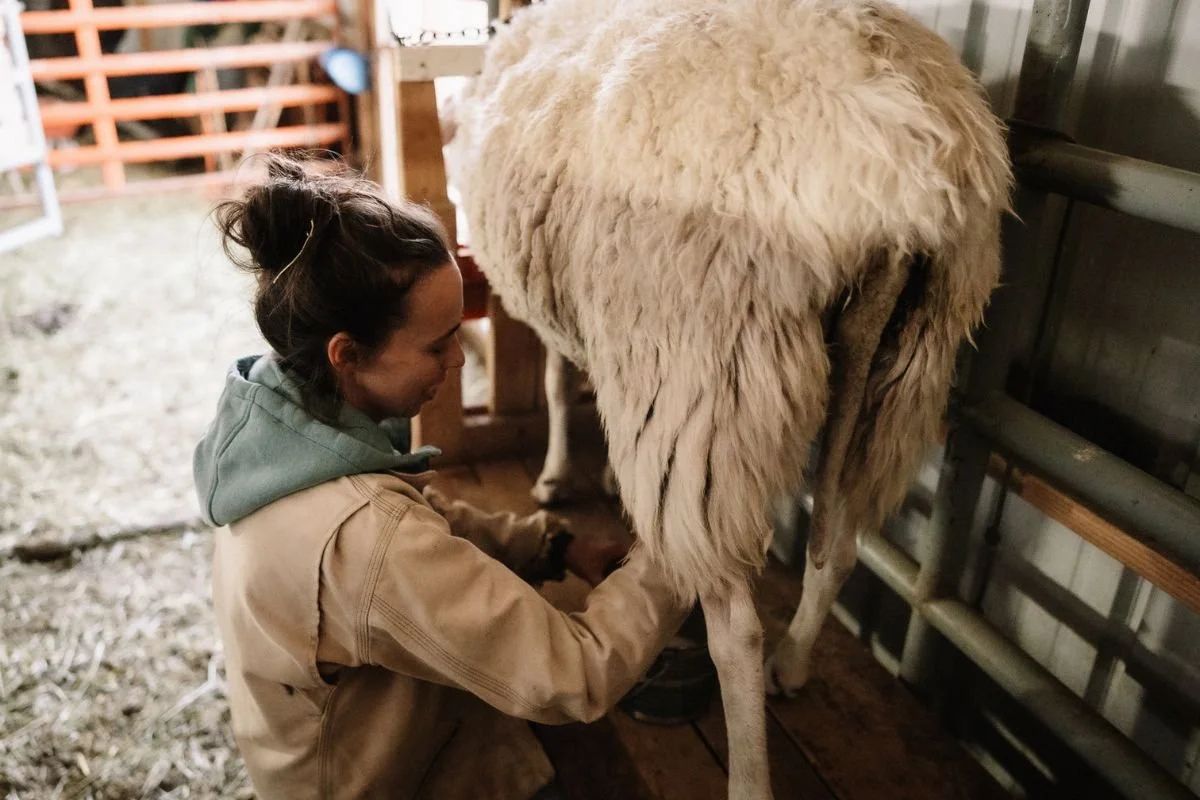
I have been milking some sort of dairy animal or another for the past twelve years. Over the years, my pre- and post-milking routine has changed some. Today I'd like to walk you through my process and why it works for me.
My Sheep Milking Routine
When people ask me about my milking routine, I think they're often hoping for a definitive answer. They want to know the "right" way to do it.
The problem is that there isn't one.
There is a wide spectrum of what you can do — starting with doing nothing more than putting a ewe on the stand and milking her, all the way to extensive sanitation protocols involving gloves, disposable towels, pre-dips, post-dips, strip cups, and more.
Over the years I've settled somewhere in the middle.
Not because I've researched every possible milking protocol and determined mine is the best. And not because I think people who do more or less are wrong.
I've simply found what works on my farm.
If I started having issues with mastitis, dirty milk, or poor milk quality, I would absolutely reevaluate my routine. But after twelve years of milking dairy animals, I've learned that not every problem needs to be solved before it exists.
Sometimes experience teaches you to add steps.
Sometimes experience teaches you to remove them.
Pre-Milking Routine
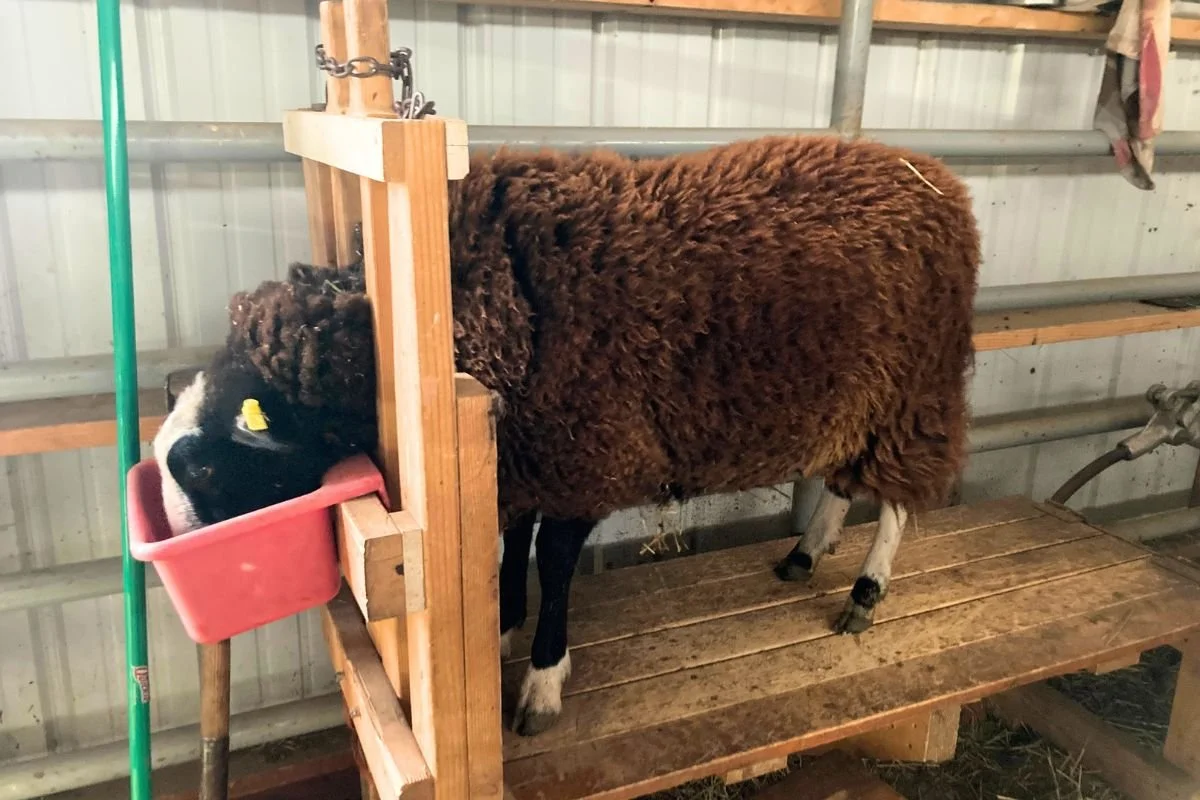
Step 1
Put the ewe up on the stand and lock the head catch so she is secured.
Step 2
Use my hand or a horse brush to remove as much loose debris (wool, straw, hay, manure, etc.) as possible from around her udder, belly, and sides.
Step 3
Use a small broom to sweep the milk stand.
Step 4
Wring out a warm, soapy towel and use it to wash her udder.
Step 5
Fold the towel in half (so I have a clean section) and use it to wipe down her teats.
Step 6
Using a clean towel, dry off the teats and gently bump the udder to encourage milk letdown.
Step 7
Milk the ewe out.
Post-Milking Routine
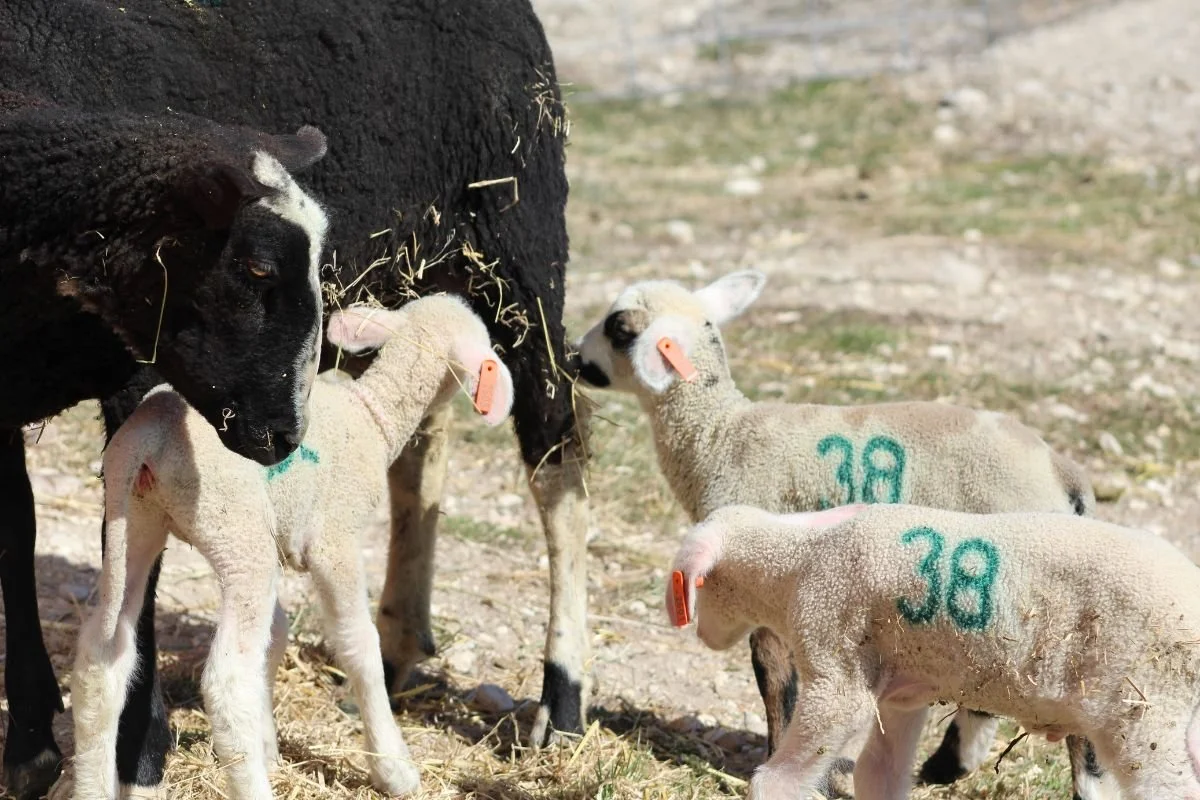
Step 1
Let the ewe off the milking stand and give her back her lamb (if she's lamb sharing).
That's it.
My Threshold
Everyone develops a threshold for what they consider clean enough.
Mine looks something like this:
Remove obvious dirt, wool, hay, manure, and debris from the ewe.
Wash the udder with a warm, soapy towel.
Dry the teats before milking.
Filter the milk.
Wash my equipment with soap and water.
Could I do more? Absolutely.
Could I do less? Probably.
But this routine has consistently produced clean milk and healthy udders in my flock, so I haven't felt the need to complicate it.
Sometimes I think it's helpful to zoom out and remember that people have been milking sheep for thousands of years.
Even today, there are shepherds all over the world who don't have stainless steel milk rooms, disposable towels, teat dips, or specialized dairy equipment. They catch their sheep, milk them, and turn that milk into cheese using methods that have been passed down through generations.
That doesn't mean cleanliness isn't important. It is.
But it does remind me that successful dairying isn't dependent on owning every product or following every protocol. For most of human history, people worked with the resources they had available and adapted their practices to their environment.
A Note About Post Dips
One thing you'll notice is that I don't use a post dip.
That's not because I think post dips are bad or unnecessary. They can be a useful tool, especially in wet, muddy conditions or in herds dealing with mastitis issues.
I simply haven't found them necessary for my flock and management system.
If you live somewhere that is consistently muddy, or if you have ewes with very low-hanging udders that are close to the ground, you may want to take additional precautions. In those situations, I might let ewes stand on the milk stand for an extra fifteen minutes or so after milking to allow the teat canal to close, or I might use a post dip to provide additional protection.
Neither of those things have been a concern in my flock, so I haven't worried about them.
Final Thoughts
One thing I've learned from both milking sheep and making cheese is that beginners often spend a lot of energy worrying about doing everything perfectly.
I understand why. Nobody wants to make a mistake.
But there is a difference between being thoughtful and being fearful.
Learn good practices. Understand why people do things. Pay attention to your animals and your milk.
Then find a routine that works for your situation.
If a problem crops up, address it.
Until then, don't feel obligated to adopt every step, gadget, product, or protocol you come across on the internet just because someone else swears by it.
After all, if it ain't broke, don't fix it.
More posts you might enjoy:
Pin for later
