
Breeding Sheep out of Season: My Experiment with Fall Lambing Dairy Ewes
Have you ever wondered if sheep can be bred outside of their normal breeding season? Most sheep naturally breed in the fall and lamb in the spring. But what if you want milk year-round, fall lambs, or simply want to experiment with a different production schedule?
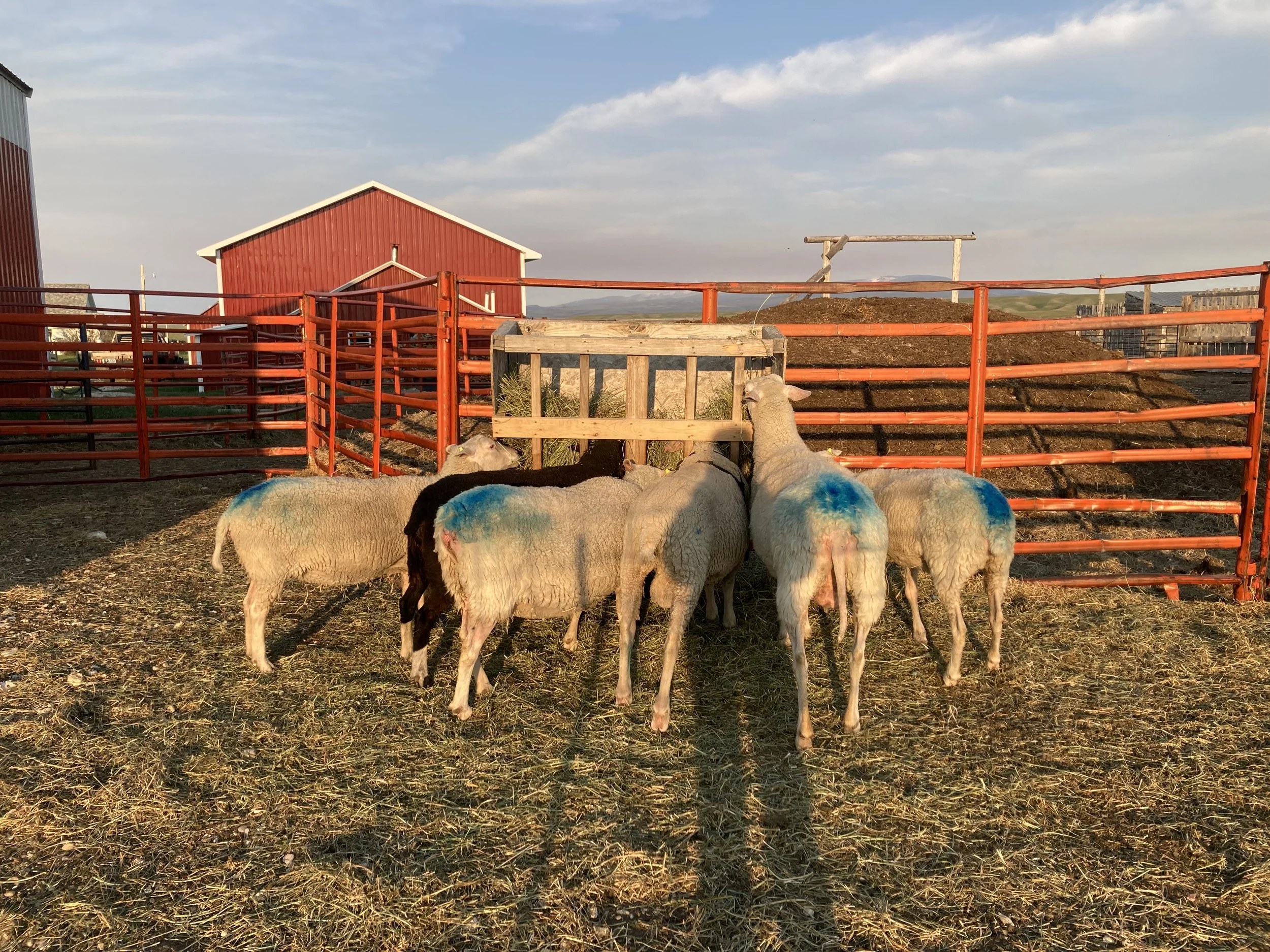
This year, I decided to try breeding a small group of dairy ewes in the spring to see if I could achieve fall lambing. In this post, I'll share exactly what protocol I used, why I chose it, what worked, and what questions I'm still hoping to answer.
For dairy sheep owners, extending the breeding season could mean a more consistent milk supply and the opportunity to make cheese during the cooler months of the year. That's exactly what inspired this experiment.
Spring Breeding Sheep for Fall Lambing
Sheep are naturally seasonal breeders. As daylight hours shorten in the fall, ewes begin cycling and become fertile. This timing allows lambs to be born in spring when forage is abundant.
So why would someone want to breed sheep out of season?
One reason is milk production. Sheep have a much shorter lactation than cows or goats. By staggering lambing seasons, a dairy shepherd may be able to maintain milk production throughout more of the year.
Personally, I enjoy milking and cheesemaking far more during the cool weather of fall and winter than during the heat of summer, so I decided to give spring breeding a try.
Which Sheep Breeds Can Breed Out of Season?
Some breeds naturally have a longer breeding season than others.
Breeds originating near the equator or in the Southern Hemisphere often breed year-round. The farther north a breed originated, the more seasonal its breeding tends to be.
Examples of sheep that frequently breed out of season include:
Finnsheep (Finns)
Dorset sheep
More seasonal breeds include:
Icelandic sheep
Many northern European breeds
The Ewes Included in My Experiment
For this experiment, I selected five ewes:
Nurse Momma – mature East Friesian/Lacaune ewe
Shorty – mature East Friesian/Finn ewe
Joy – two-year-old East Friesian cross
Cub – yearling East Friesan cross
No Name Ewe – yearling East Friesan cross
The two yearlings had been held over from fall breeding because they were slightly smaller than I wanted before their first lambing so I figured this gave them an opportunity to continue growing.
Methods for Inducing Estrus in Sheep
There are several methods commonly used to bring ewes into heat outside of their normal breeding season:
Light manipulation
The ram effect
CIDRs (Controlled Internal Drug Release inserts)
I am not an expert in any of these methods, which is exactly why I wanted to document this experiment. There is surprisingly little information available for small-scale homesteaders interested in trying spring breeding.
Why I Chose CIDRs
Light manipulation requires keeping ewes indoors under a strict lighting schedule for several weeks. Since my sheep graze pasture, this wasn't practical.
The ram effect requires completely removing the ram from sight and smell of the flock for an extended period before reintroducing him. I didn't have a suitable location to accomplish that.
That left CIDRs.
I was already familiar with CIDRs because I've used them for years when artificially inseminating my cows.
What Is a CIDR?
A CIDR is a vaginal insert that slowly releases hormones to help synchronize and induce estrus.
The insert remains in place for a specified number of days before removal.
Many protocols also include a trigger shot after CIDR removal to encourage ovulation. Different protocols vary in both CIDR duration and whether a trigger shot is used.
My Spring Breeding Protocol
Here is the protocol I followed:
Day 0
Insert CIDRs
Day 12
Remove CIDRs
Give 2 mL PG600 intramuscularly in the rump using a 1-inch needle
Immediately place ewes with the ram
Most breeding occurred approximately 24 to 36 hours later.
Why I Modified the Protocol
A young researcher who has published extensively on out-of-season sheep breeding suggested:
Leaving CIDRs in for 10 days instead of 12
Waiting 24 hours after CIDR removal before administering the trigger shot
I chose a different approach because many successful protocols do not use a trigger shot at all. Since I was already simplifying the process for a small homestead setting, I opted to administer the PG600 immediately upon CIDR removal.
This may not be the optimal protocol, but it was the one I chose for this experiment.
Initial Results
The ewes became receptive approximately 24 hours after CIDR removal.
My ram successfully marked and bred all five ewes within one day.
At this stage, the breeding portion of the experiment appears successful, but pregnancy confirmation will come later.
Pros and Cons of Using CIDRs
Pros
Induces estrus out of season
Synchronizes breeding
Creates a tighter lambing window
Easy to administer
Generally good success rates
Cons
Expensive
Must purchase a package larger than many homesteaders need
Shelf life is limited
Pros and Cons of Using PG600
Pros
Encourages ovulation
May improve conception rates
Relatively easy to administer
Cons
Additional expense
Requires giving an intramuscular injection
What's Next?
The ewes will remain with the ram for two full cycles, approximately 34 days.
After 17 days, I will switch the color of the crayon in his marking harness. This will allow me to determine whether any ewes cycle again.
After 34 days, the ram will be removed.
Approximately 30 days later, the ewes will be ultrasounded to confirm pregnancy.
If successful, lambing should occur in October.
Questions I Hope to Answer
If the ewes settle and lamb this fall, I'll be watching closely for answers to several questions:
How do fall-born lambs perform compared to spring-born lambs?
Will they thrive through a Montana winter?
How will they perform on hay versus fresh pasture?
Will they experience more health challenges?
Will fall lambing improve milk production timing for cheesemaking?
Will the milk be richer during winter production?
How strong will the market be for fall-born lambs?
A Note About Flushing
Initially, I planned to flush the ewes with grain before breeding.
As breeding time approached, however, I noticed that most of the mature ewes were already carrying excellent body condition. I was concerned that additional grain could make them overly fat, which can negatively impact fertility.
Instead, I relied on the lush spring pasture. In many ways, the abundant grass may have acted as a natural flushing program.
Final Thoughts
At this point, the breeding portion of the experiment appears promising, but there is still a long way to go.
I'll continue updating this post as pregnancy checks, lambing season, and milk production unfold.
Have you ever tried breeding sheep out of season? Would you consider fall lambing? I'd love to hear about your experiences and questions in the comments.
Frequently Asked Questions
Can sheep breed in the spring?
Some sheep can. Fertility depends on breed, location, genetics, and management practices. Many dairy and Finn-cross sheep can breed outside the traditional fall breeding season.
Do CIDRs work in sheep?
CIDRs are widely used to synchronize estrus and induce breeding both in and out of season. Success rates vary depending on breed, nutrition, management, and protocol.
Why would someone want fall lambs?
Fall lambing can provide milk during winter, spread labor throughout the year, reduce spring workload, and potentially create unique marketing opportunities for breeding stock and lamb sales.
More content you might enjoy:
Pin for later
