When is my Lamb Ready to Butcher?
Learn how to tell when a lamb is ready to butcher, including ideal weight, loin condition, and why timing that works for you matters most.
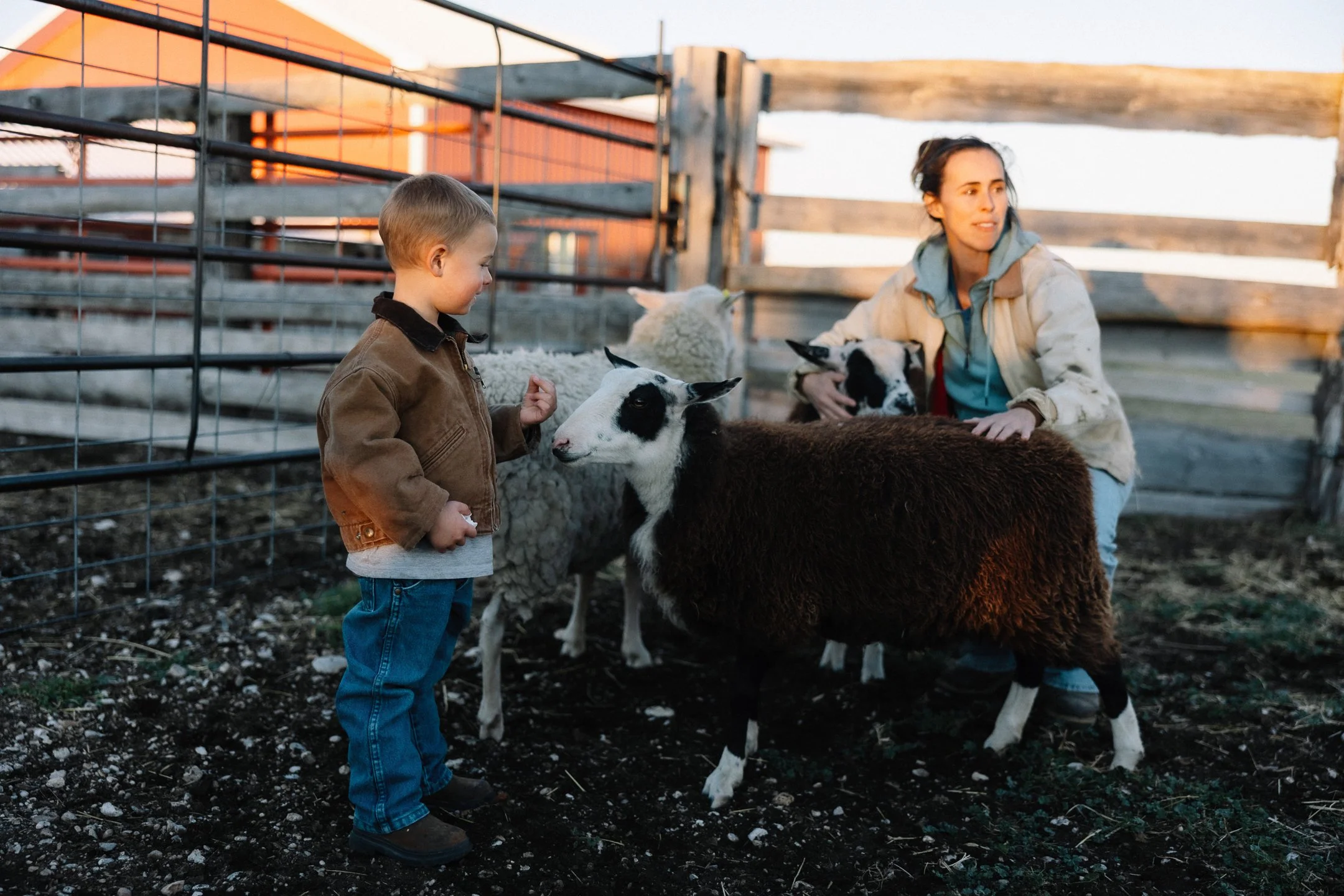
When I was new to raising sheep, one of the biggest questions I wrestled with was:
“How do I know when my lamb is actually ready to butcher?”
Not in theory. Not according to a textbook or commercial market standard—but in real life, on a small homestead, butchering our own lambs at home. If you’re raising lambs for your freezer, this post will walk you through what actually matters, what doesn’t, and how to confidently choose the right time—even if your lamb doesn’t fit an “ideal” mold.
I remember standing in the pasture, lamb in front of me, wondering if I should wait longer—or if waiting longer would actually make things worse. Would the meat be tough? Was the lamb too small? Too big?
What I eventually learned is that home butchery changes the equation entirely. You’re not chasing processor schedules, market weights, or someone else’s standards. You’re choosing the timing that works for your land, your animals, and your family.
When Is a Lamb Ready to Butcher at Home?
For homesteaders butchering their own lambs, readiness comes down to three main things:
Body condition (especially the loins)
Reasonable weight for the breed
Timing that works for you
Let’s break those down.
Body Condition Matters More Than the Scale
If you take nothing else from this post, take this:
A scale is helpful—but your hands are better.
To check the loins:
Stand behind the lamb
Place your hands on either side of the spine
Feel for muscle filling in the loin area
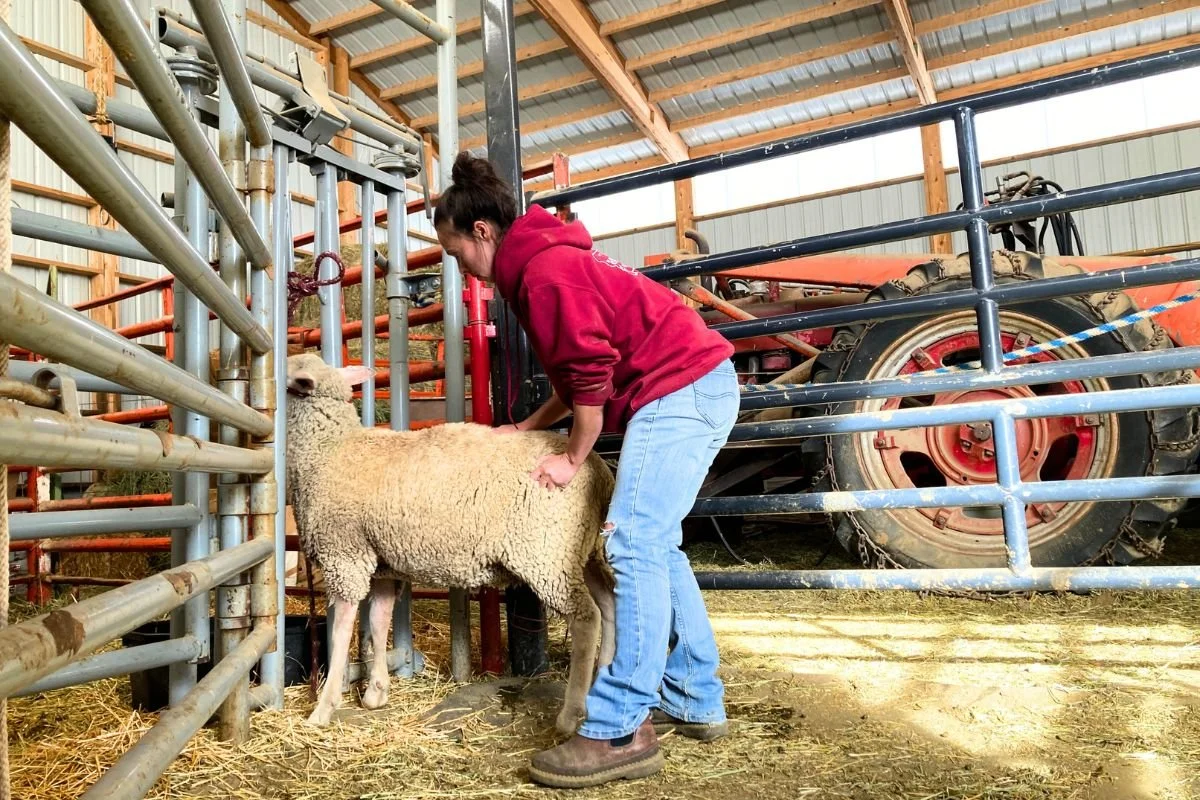
What you’re looking for:
❌ Sharp, narrow spine = needs more time
✅ Rounded, filled-in loins = ready
This works across breeds and feeding styles and is especially useful for home butchers who aren’t chasing exact numbers.
Breed Makes a Big Difference in “Ideal” Weight
Not all lambs are built to reach the same size—and that’s okay.
Some realistic examples:
Icelandic or Finn lambs often finish closer to 80–100 lbs live weight
Suffolk or other meat breeds may reach 120–130 lbs easily and quickly
Crosses will fall somewhere in between
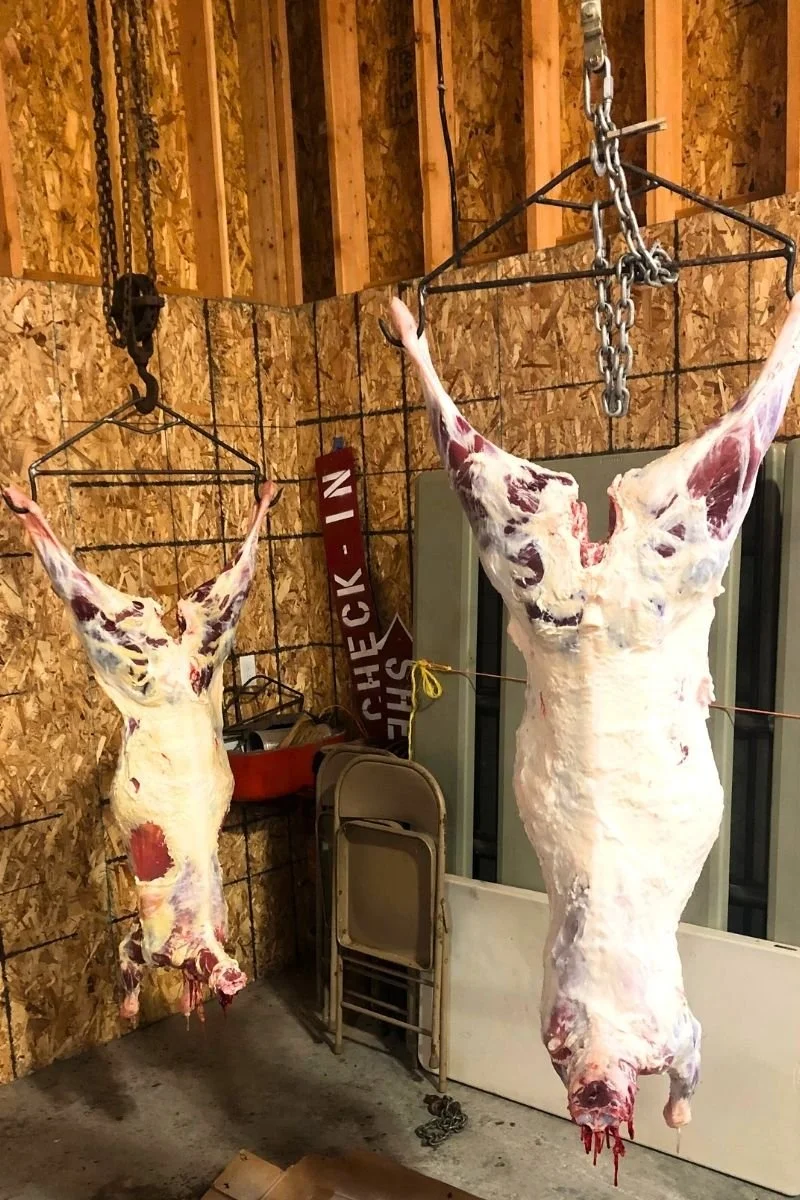
You can see from these two carcasses that the one in front is noticeably larger even though they are the same age. The one in front is from a meat breed, (Suffolk x hamp) and the other was a bum lamb from a dairy breed. Both will taste great, one just provided slightly more meat.
Expecting a smaller-framed breed to hit large commercial weights will only lead to frustration—and often unnecessary feed costs.
Age Is Secondary to Condition
Most home-raised lambs are butchered somewhere between 6–10 months, but age alone doesn’t tell the full story.
Factors that affect growth:
Breed and genetics
Pasture quality
Milk access early on
Whether they’re grass-fed vs grain fed
The Best Time is When It Works Best for You
Yes, I am serious!
This is where homesteading shines.
You might choose to butcher when:
Pasture quality is declining
You want to avoid feeding through winter
You finally have a free weekend
The weather is right
The lamb is “good enough” and you’re ready
A lamb doesn’t have to be perfect to be delicious. Some of our best eating lamb came from animals that were simply butchered at the right time for us.
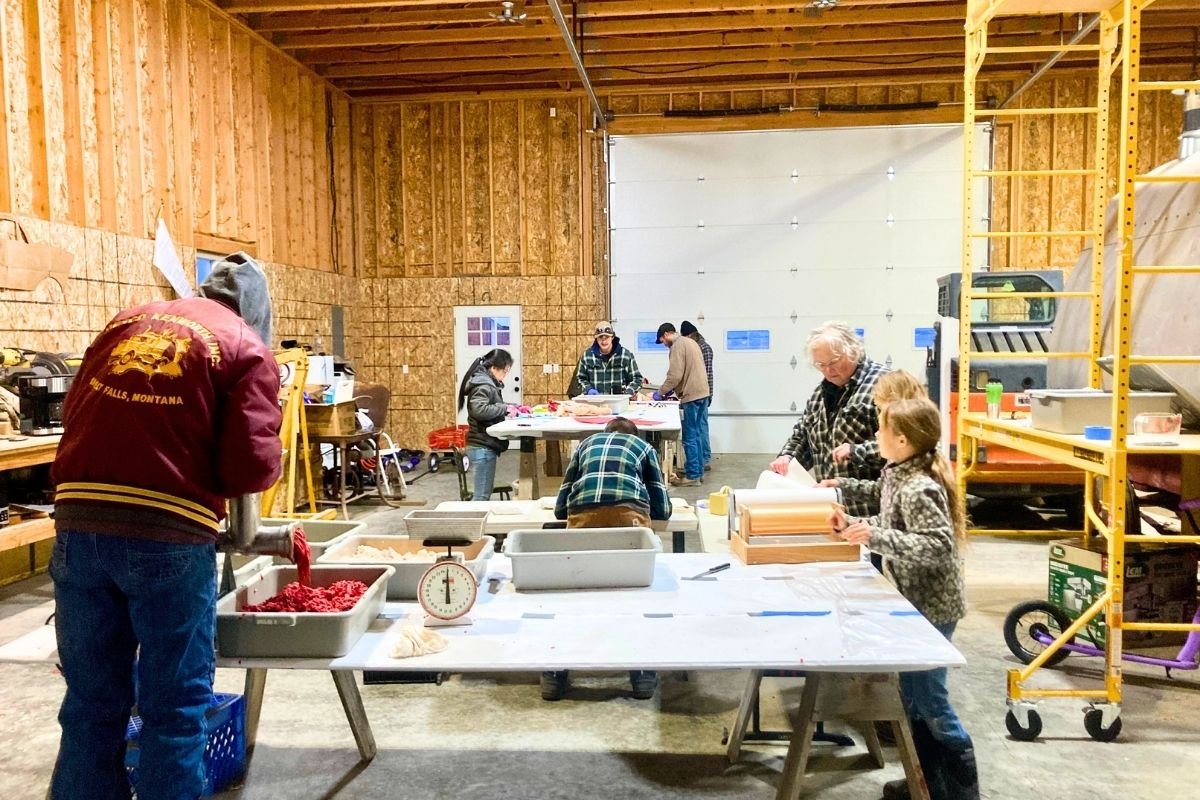
See, we butcher all of our own meat animals right at home. We do not have a cooler, so we have to butcher when the weather is right - cold enough out that the animals cool out quickly and efficiently, but yet not so cold that the carcass will freeze solid while hanging and make it impossible to cut up.
Home Butchery Changes the Pressure
Because we butcher our lambs at home, we’re not limited by:
Processor availability
Transport stress
Minimum weights
If you’re interested in butchering your own lambs, I walk through the exact tools we use (and what you can skip) in this post:
👉 The Bare Necessities Guide to Butchering Lambs at Home
Home butchery gives you flexibility, confidence, and a deeper connection to your food.
FAQ: Common Questions New Sheep Keepers Have
Do lambs have to hit a specific weight to butcher?
No. Body condition and breed-appropriate size matter more than a specific number.
Will smaller lambs be tough?
No. Smaller lambs are often very tender, with a mild flavor.
Is it better to butcher before winter?
Often yes—especially if pasture is declining and you don’t want to feed grain or hay just to add weight. However, we often butcher during winter so that we have the right weather for butchering. A lot of times it just depends on the year!
Related Content You’ll Enjoy:
Pin for Later
