How to Make Bone Broth (Lamb, Beef, or Chicken)
Making your own bone broth at home is surprisingly simple—and the process is nearly identical whether you’re using lamb, beef, or chicken bones. In this post, I’ll walk you step by step through how I make rich, flavorful bone broth on our homestead, along with the tips I’ve learned the along the way.
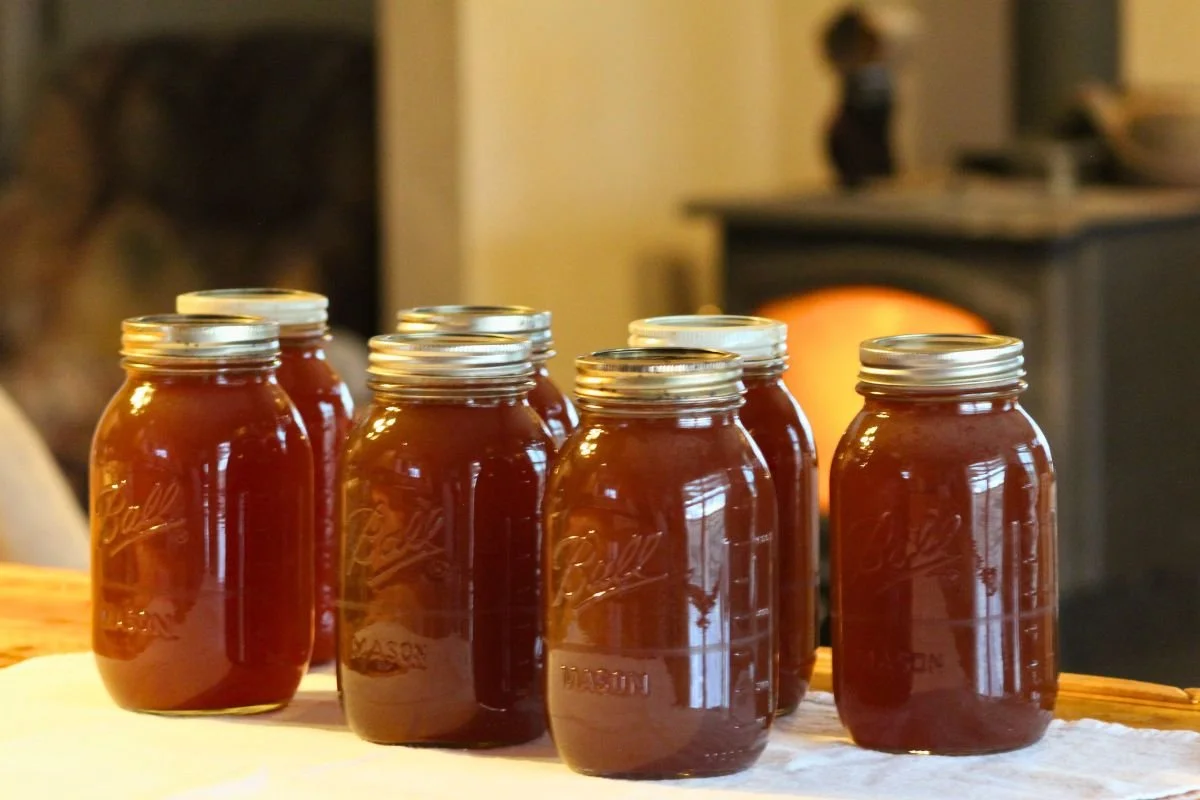
Homemade bone broth is one of those traditional skills that feels intimidating at first, but once you’ve done it, you realize it’s mostly hands-off and incredibly forgiving.
I still vividly remember the first time I made beef bone broth years ago. It was… not good. Thankfully, that batch taught me a lot. Since then, I’ve refined my process and picked up a handful of small but important tricks that make all the difference—and I’m excited to pass them on to you.
How to Make Bone Broth at Home (Lamb, Beef, or Chicken)
Bone broth is one of the best ways to use more of the animal, stretch your food budget, and add deeply nourishing ingredients to everyday meals.
You might be wondering: Why should I make bone broth in the first place? There are two big reasons. First, it honors the animal by using parts that often get discarded. If you are looking into butchering your own animals at home check out this post. Second, bone broth is rich in minerals, gelatin, and collagen that support gut health, joints, and overall wellness.
Bone Broth vs. Stock: What’s the Difference?
You’ll often hear the terms broth and stock used interchangeably. Traditionally, broth is made with meat, while stock is made with bones. This recipe leans heavily toward bones—sometimes with small bits of meat still attached—so while it may technically be a stock, I simply call it bone broth.
The Best Bones for Bone Broth
Any bones can be used, but cartilaginous bones (bones with joints) will give you the most collagen and gelatin.
Chicken: Whole carcass and especially feet
Lamb & Beef: Leg bones, knuckles, joints, and marrow bones
Simple Bone Broth Ingredients
I keep my ingredient list intentionally simple so the broth can be used in a wide variety of recipes.
Bones (chicken, lamb, or beef)
Carrots (or carrot tops)
Onions (skins and root end included)
Celery
Apple cider vinegar
Optional: salt, peppercorns, bay leaves
I avoid adding garlic or delicate herbs, especially if I plan to can the broth, as they can turn bitter after canning.
Equipment I Use
Large stockpot, crockpot, or roaster oven
Jelly roll pans
Fine sieve or colander
Cheesecloth
I’ll reference these tools in the steps below so you can adapt the process to what you already have.
Step-by-Step Bone Broth Instructions
Step 1: Roast the Bones (Don’t Skip This)
Roasting is the most important step for developing deep, rich flavor.
Spread bones out on one or more jelly roll pans. Add carrots, onion skins, and celery. Preheat your oven to 350°F and roast for 1–2 hours, watching closely. You want everything nicely caramelized—not burned.
Step 2: Simmer the Broth
Transfer the roasted bones and vegetables to your cooking vessel of choice. Add:
A splash of apple cider vinegar (helps extract minerals)
Salt, if using
Optional peppercorns and bay leaves
Add enough cold water to fully cover the bones. Bring just to a simmer, then reduce heat and maintain a low, gentle simmer for 24 hours.
Step 3: Strain and Simmer Again
After 24 hours, strain the broth through a cheesecloth-lined colander. Set the broth aside to cool.
Return the bones and vegetables to the pot, add about half the original amount of water, a bit more vinegar, and additional salt if desired. Simmer for another 48 hours.
Step 4: Cool and Remove Fat
Let each batch cool overnight. Any fat will rise to the top and can be removed. I save it for cooking—or feed it to the chickens.
At this point, your broth is ready to use, freeze, or pressure can.
A Note on Gelling (and Cloudy Broth)
If your broth turns into a gel after cooling—congratulations! That means it’s rich in gelatin. If it doesn’t gel, don’t worry. Different bones yield different results.
One trick I use to encourage gelling is adding chicken feet.
If your broth looks cloudy, it simply means it boiled too rapidly. Cloudiness doesn’t affect safety or nutrition—just appearance. Aim for a slow simmer next time.
Troubleshooting: Too Much Fat or Off Flavors
The only truly bad batch of broth I’ve made came from extremely fatty beef bones. If this happens to you, try blanching the bones first:
Place bones in a pot, cover with cold water, bring to a boil, then simmer for 15 minutes. Drain, rinse the bones, and proceed with roasting. This removes excess fat and impurities and greatly improves flavor.
How I Use Bone Broth
I use bone broth everywhere—soups, gravies, cooking rice, roasts, and more. Most of the time, I simply replace water in recipes with broth.
My mom jokingly calls it my “liquid gold.” I’ll even sip it plain like tea when I’m under the weather—or add it to a berry smoothie (true story!). Bone broth played a huge role in healing my gut and restoring my health during the season when I was working to get pregnant naturally after years of infertility.
Frequently Asked Questions
-
We like to soak our feet in water first to loosen debris, then we scrub them. Next, we blanch them in boiling water then put directly in an ice water bath before peeling them and removing the toe nails.
-
Absolutely! I keep a bag in my freezer to keep bones from things like chops, roasts, and steaks.
-
Bone broth must be pressure canned. Prepare your jars, lid and canner. Bring broth to a simmer. Pressure can according to the appropriate pressure for your altitude - 20 minutes for pints and 25 minutes for quarts.
Related Content You Might Enjoy

Bone Broth
A simple, mostly hands-off method for making rich, nourishing bone broth from lamb, beef, or chicken bones.
Ingredients
- 1.5 lbs bones
- 5 cups water
- 1 tbsp sea salt (optional)
- 1 tbsp apple cider vinegar
- 1 cup celery
- 1.5 cups of onion
- 1 carrot
- 10 peppercorns
- 2 bay leaves
Instructions
- Preheat oven to 350.
- Put bones and veggies on a baking sheet.
- Bake for 1-2 hours while watching carefully to avoid burning.
- Once nicely browned, add bones to a roaster oven. Add water (enough to cover), salt (if using) and ACV.
- Bring bones to a simmer and simmer for 24 hours.
- Remove bones, strain broth through a fine mesh strainer lined with cheesecloth, cool in fridge overnight.
- Meanwhile, put bones and veggies back in the roaster oven. Add water to cover (about half as much as the first time), more salt if you'd like and another splash of acv. Simmer an additional 48 hours.
- After 48 hours, strain as before. Once cool, remove the fat. Proceed to preserve as desired - use right away, freeze, or can.
Notes
- A note on making larger batches: Adjust ingredient amounts as necessary for the amount of bones you have. I usually process 5-10 chickens at a time or 10-15lbs of lamb / beef bones at a time. Despite the size of your batch, do not increase salt and ACV much beyond what is listed in the recipe.
- A note on salt: You do not need to add salt since most recipes that you use broth in will have added salt. I like to add a little salt to mine for added flavor since I enjoy drinking it plain.
- A note on water: If you need to add more water in order to cover your bones than what is listed in my recipe, that is fine! Depending on what type and shape of pot you use you may need more or less water to cover. I often add more water than called for.
Pin for Later
